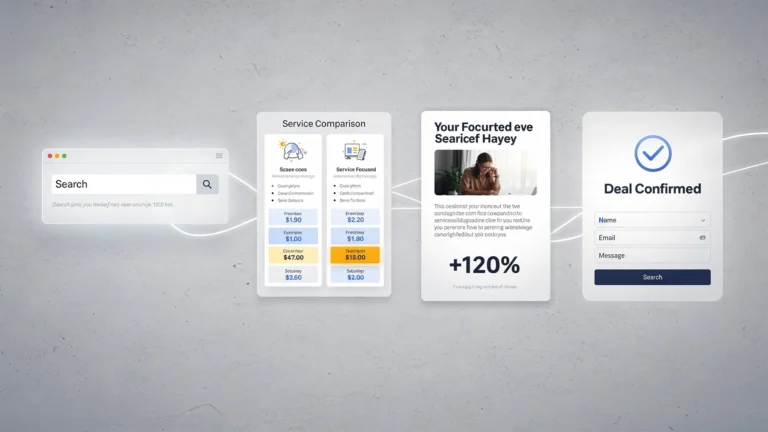

Content marketing is often treated like a publishing task: write posts, design social graphics, send a newsletter, repeat. But if the goal is revenue, that approach is too shallow. Effective content marketing is a growth system that attracts the right audience, earns trust before a sales conversation, and gives prospects clear reasons to choose you when they are ready to buy.
For brands in competitive markets such as Dubai and the wider UAE, this matters even more. Buyers compare options quickly. Ad costs can rise. Search results are crowded. Social feeds move fast. A strong content strategy gives your business an owned advantage: useful ideas, credible proof, and demand that does not disappear the moment a campaign budget pauses.
The key is to build content that serves two goals at once: lead generation now and long-term growth over time.

Why content marketing must be built for revenue, not just reach
Reach is useful, but it is not the final objective. A blog post with thousands of visitors can still fail if those visitors are not potential buyers. A LinkedIn post can gain engagement without moving anyone closer to a conversation. A downloadable guide can generate leads, but if those leads are unqualified, your sales team inherits the problem.
Revenue-focused content marketing starts with intent. It asks: Who are we trying to attract? What problem are they actively trying to solve? What information do they need before they trust us? What action should they take next?
This does not mean every piece of content should be a sales pitch. In fact, the opposite is usually true. The strongest content strategies create value before asking for anything. They educate, clarify, compare, diagnose, and inspire. Then they guide the right people toward the next step, whether that is a consultation, a product demo, a quote request, or a lead magnet.
Google’s own guidance around creating helpful, reliable, people-first content reinforces this principle: content should satisfy real user needs, demonstrate expertise, and avoid being created only to manipulate rankings. That same philosophy works for lead generation. Help first, convert naturally.
Start with the buyer, not the content calendar
A content calendar is only useful after you understand the buyer journey. Many brands skip this step and jump straight into topics, formats, and publishing frequency. The result is usually scattered content: some educational posts, some promotional updates, some trend commentary, but no clear path from awareness to conversion.
Before planning topics, define three things.
First, identify your ideal customer profile. This includes industry, company size, location, budget range, decision-maker roles, and the problems that trigger demand. For a B2B brand, the target may include founders, marketing directors, procurement teams, or regional managers. For a consumer brand, it may include lifestyle segments, purchase motivations, and loyalty drivers.
Second, map the questions your audience asks at each stage. Early-stage buyers may search for definitions, benchmarks, or problem symptoms. Mid-stage buyers compare approaches, vendors, tools, and pricing models. Late-stage buyers want proof, case studies, implementation details, and risk reduction.
Third, connect every content theme to a business objective. Some content should increase search visibility. Some should nurture leads. Some should support paid media landing pages. Some should help sales teams answer objections. When each asset has a job, content stops being a cost center and becomes a growth asset.
Build a funnel that matches search intent and buying intent
A lead-generating content strategy needs balance. If you only publish top-of-funnel educational content, you may attract traffic but struggle to convert. If you only publish bottom-of-funnel sales content, you may miss buyers who are not ready yet but will be valuable later.
A practical content funnel looks like this:
| Funnel stage | Buyer mindset | Content examples | Primary goal |
|---|---|---|---|
| Awareness | “I have a problem or opportunity.” | Educational blog posts, trend reports, explainer videos, social thought leadership | Attract relevant audiences |
| Consideration | “What are my options?” | Comparison guides, strategy frameworks, webinars, checklists | Build trust and capture leads |
| Decision | “Who should I choose?” | Case studies, service pages, ROI calculators, testimonials | Convert qualified prospects |
| Retention | “How do I get more value?” | Email sequences, onboarding content, best-practice guides | Increase loyalty and lifetime value |
This structure helps prevent a common mistake: creating content for only one moment in the journey. Long-term growth comes from building a content ecosystem where each piece supports the next.
For example, an awareness article may explain how performance marketing works in the UAE. That article can link to a more specific guide about paid media strategy, which can lead to a case study, which can invite the reader to request a consultation. Each step should feel helpful, not forced.
Use SEO to create compounding visibility
Paid campaigns can generate immediate traffic, but SEO-led content can compound. A well-optimized article, guide, or landing page can keep attracting qualified visitors for months or years if it stays relevant and is maintained properly.
That does not mean chasing every keyword. The best SEO content strategy focuses on topics that overlap audience demand, brand expertise, and commercial value. For example, a growth agency should not publish generic marketing content simply because search volume is high. It should prioritize topics that potential clients actually research before hiring support, such as lead generation strategy, paid media optimization, content marketing ROI, lifecycle marketing, or analytics setup.
Strong SEO content also needs depth. Search engines are increasingly good at identifying whether a page genuinely answers the query. A thin article that repeats a keyword will not build authority. A useful article explains the problem, offers practical steps, answers follow-up questions, and gives readers a reason to trust the brand behind it.
A sustainable SEO content system includes:
- Topic clusters built around high-value business themes
- Internal links that guide readers to related resources and services
- Search-optimized headings that reflect real questions
- Clear calls to action aligned with user intent
- Regular updates to keep examples, data, and recommendations current
The goal is not just to rank. The goal is to rank for topics that bring potential buyers into your ecosystem and move them closer to action.
Create lead magnets that are worth the form fill
Gated content can still work, but only when the value is strong enough. People are more cautious with their contact details than they used to be. A vague PDF called “Ultimate Guide to Marketing” is unlikely to generate high-quality leads unless it solves a specific problem.
Effective lead magnets are practical, focused, and tied to a clear business pain. They help the reader diagnose, plan, compare, or calculate something. Examples include a campaign planning template, a paid media audit checklist, a content calendar framework, an ROI worksheet, or a regional market entry guide.
The best lead magnets also qualify prospects. If someone downloads a checklist on scaling paid acquisition in the UAE, that tells you more than a generic newsletter signup. If someone requests a content audit, they are likely closer to a buying decision.
Keep forms as simple as possible. For early-stage content, asking for a name and email may be enough. For decision-stage assets, additional fields such as company, role, and budget range may be appropriate. The more information you request, the more value you need to provide in return.
Turn content into a distribution engine
Publishing is not distribution. Many brands invest time into creating content, post it once, and move on. That leaves value on the table.
A strong content marketing system uses paid, owned, and earned channels together. Owned channels include your website, email list, organic social pages, and customer communications. Paid channels include search ads, social ads, retargeting, and sponsored content. Earned channels include PR, partnerships, influencer mentions, backlinks, and community conversations.
The same core idea can be repurposed across multiple formats. A detailed blog post can become a LinkedIn carousel, a short video script, an email sequence, a sales enablement one-pager, and a webinar discussion. This does not mean copying and pasting the same message everywhere. It means adapting the insight to the context of each channel.
Distribution should also match funnel stage. Awareness content often performs well through organic search, social, influencer collaboration, and paid amplification. Consideration content works well in email nurturing, retargeting, and webinars. Decision content should be easy to find on service pages, sales decks, proposal follow-ups, and remarketing journeys.
When distribution is planned from the start, every content asset has a longer useful life and a higher chance of generating leads.
Use content to improve paid media performance
Content marketing and paid media should not operate in separate silos. Useful content can make advertising more efficient by warming up audiences before a direct conversion ask.
For example, instead of sending cold traffic directly to a sales page, a brand can promote an educational guide or diagnostic checklist to a targeted audience. Visitors who engage can then be retargeted with a relevant case study, offer, or consultation CTA. This creates a more natural path from problem awareness to vendor evaluation.
Content can also improve ad messaging. High-performing blog topics, social comments, search queries, and lead magnet downloads reveal what the audience cares about. Those insights can shape ad angles, landing page copy, and creative testing.
For performance marketers, content is not just a brand activity. It is a source of audience intelligence, conversion support, and campaign efficiency.
Measure the metrics that actually show progress
One of the biggest reasons content marketing gets undervalued is poor measurement. If you only report pageviews and impressions, leadership may see content as an awareness expense. If you connect content to pipeline, assisted conversions, lead quality, and retention, it becomes easier to defend investment.
Different content types need different metrics. A top-of-funnel article should not be judged only by direct sales. A bottom-of-funnel service page should not be judged only by traffic. The metric should match the job of the asset.
| Content goal | Useful metrics | What to look for |
|---|---|---|
| Visibility | Organic impressions, rankings, referral traffic, social reach | Are relevant audiences discovering the brand? |
| Engagement | Time on page, scroll depth, return visits, email clicks | Is the content useful enough to hold attention? |
| Lead generation | Form fills, demo requests, consultation bookings, content downloads | Is the content creating measurable demand? |
| Lead quality | Conversion rate to opportunity, sales feedback, CRM source data | Are the right prospects entering the pipeline? |
| Long-term growth | Returning users, branded search, assisted conversions, customer retention | Is content building durable demand and trust? |
Analytics setup matters here. Use UTM parameters for campaigns, connect forms to your CRM where possible, and review assisted conversions in your analytics platform. Also pay attention to qualitative signals: sales team feedback, customer questions, comments, and recurring objections.
A single blog post may not close a deal on its own. But it may introduce the brand, answer a key objection, support a retargeting campaign, and give the sales team a useful follow-up asset. That influence should be measured.
Create content that sales teams actually use
If your sales team never uses your content, that is a warning sign. Lead-generating content should make sales conversations easier. It should answer common questions, reduce uncertainty, and help prospects explain the value internally.
Sales enablement content can include comparison pages, objection-handling guides, industry-specific decks, short case studies, implementation explainers, pricing education, and ROI narratives. These assets are especially valuable for complex B2B purchases where multiple stakeholders need alignment.
The best source of topics is often the sales team itself. Ask them what prospects hesitate about, what questions appear in almost every call, what competitors are mentioned, and what proof buyers request before moving forward. Those conversations can become high-intent content that directly supports pipeline.
This is where content marketing becomes more than acquisition. It becomes a shared language between marketing, sales, and the customer.
Build trust with proof, not claims
Most brands say they are innovative, results-driven, customer-focused, and strategic. Those words alone do not create trust. Proof does.
Proof can take many forms: case studies, before-and-after examples, data snapshots, expert commentary, client testimonials, process breakdowns, third-party mentions, and transparent explanations of how decisions are made. In a market where buyers are exposed to constant advertising, specificity stands out.
Instead of saying “we improve ROI,” explain what was changed, why it mattered, and what result it influenced. Instead of saying “we create great content,” show the strategy behind the content, the distribution plan, and how success was measured.
This is especially important for service-based businesses. Buyers cannot always evaluate the service before they purchase. They judge your thinking, your process, your clarity, and your ability to reduce risk. Content is one of the best ways to make that expertise visible before a sales call.
Avoid the common mistakes that weaken content performance
Many content programs fail not because content marketing does not work, but because the strategy is incomplete. The most common issues are easy to recognize.
- Publishing without a clear audience or funnel stage
- Prioritizing volume over usefulness and differentiation
- Creating educational content with no next step
- Gating content that is too generic to justify a form
- Ignoring SEO and relying only on social distribution
- Measuring traffic but not lead quality or pipeline influence
- Failing to refresh older content as the market changes
The fix is not always more content. Often, the fix is better alignment. A smaller library of strategic, well-distributed, regularly updated content can outperform a large archive of disconnected posts.
A practical 90-day content marketing plan
If you want to make content marketing more accountable, start with a focused 90-day plan rather than trying to build everything at once.
During the first 30 days, audit your existing content, review analytics, interview sales or customer-facing teams, and identify the highest-value buyer questions. Look for gaps by funnel stage. You may find that you have plenty of awareness content but very little decision-stage proof, or that your service pages are not supported by educational resources.
During days 31 to 60, build a small set of priority assets. This may include one cornerstone SEO guide, one lead magnet, one case study, one email nurture sequence, and updated CTAs across relevant pages. Focus on quality and connection between assets.
During days 61 to 90, distribute and optimize. Promote the content through organic social, email, paid media, retargeting, partner channels, and sales follow-up. Track which assets attract the right visitors, which CTAs convert, and which leads progress. Use those insights to plan the next cycle.
This approach keeps the program manageable while proving value quickly. It also creates a foundation for long-term growth.
Content marketing compounds when it is maintained
The strongest content programs are not built from one-off campaigns. They are maintained like assets. High-performing articles are updated. Lead magnets are improved. Case studies are refreshed. Internal links are strengthened. Email sequences are tested. Service pages evolve as offers and markets change.
This maintenance is where long-term growth appears. Over time, your brand can build topical authority in search, a stronger owned audience, better retargeting pools, clearer sales enablement, and more trust with future buyers.
Content also supports brand memory. A prospect may not need your service today, but if they repeatedly encounter useful insights from your brand, you are more likely to be remembered when the need becomes urgent. That is difficult to achieve with short-term ads alone.
In other words, content marketing does not replace performance marketing. It strengthens it. It gives paid campaigns better stories, SEO more authority, email more value, and sales more proof.
Frequently Asked Questions
How does content marketing generate leads? Content marketing generates leads by attracting people with useful information, building trust through expertise, and guiding qualified readers toward a relevant next step such as a consultation, download, quote request, or demo.
What type of content is best for lead generation? The best content depends on buyer intent. Checklists, comparison guides, webinars, ROI calculators, case studies, and audits often work well because they solve specific problems and indicate stronger interest than general awareness content.
How long does content marketing take to show results? Some results, such as paid distribution leads or email engagement, can appear quickly. SEO-led content usually takes longer because rankings, authority, and trust build over time. A 90-day plan can show early indicators, while compounding growth often requires consistent execution.
Should content marketing be gated or ungated? Educational content that builds awareness is often better ungated because it maximizes reach and trust. Gated content works best when the asset provides clear practical value, such as a template, benchmark, checklist, or in-depth guide that justifies the form fill.
How do you measure content marketing ROI? Measure ROI by connecting content to business outcomes, not just traffic. Track leads, lead quality, assisted conversions, pipeline influence, conversion rates, customer acquisition cost, and retention impact where your analytics and CRM setup allow it.
Build a content strategy that converts and compounds
If your content is getting attention but not generating qualified leads, the issue may not be the content itself. It may be the strategy behind it.
Performance Stimuli helps brands connect content marketing with SEO, paid media, analytics, lifecycle marketing, lead generation, and broader growth strategy. From planning content around buyer intent to distributing it across the right channels, the goal is simple: create marketing that earns trust, captures demand, and supports long-term revenue growth.
Ready to turn content into a measurable growth engine? Get started with Performance Stimuli and build a strategy designed for leads, not just likes.