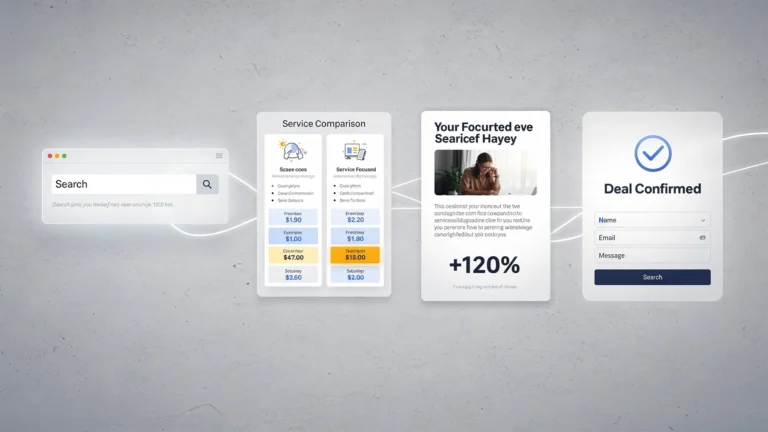

Nothing fundamental is broken.
What’s broken is how everything is connected.
Even today, core tactics still work—SEO, content, paid media—but their effectiveness depends on how they integrate into the buyer journey and influence decisions. This is the shift most organizations are missing. They are not failing because of the wrong tactics. They are failing because of the wrong system.
The 2026 Reality: Buyers Have Changed Faster Than Marketing
Most companies are still operating on an outdated model:
But here’s what 2026 data is telling us:
So what’s happening? Marketing is becoming invisible.
Not because it’s ineffective— but because it’s no longer linear or trackable in the old ways.
The Biggest Shift: From SEO to GEO
One of the most important changes highlighted in 2026:
Search is no longer just about rankings—it’s about presence in AI answers.
Contrary to popular belief:
But only when applied differently. For example:
Content works when it enables decisions—not just attracts attention
Execution is no longer enough. Context is everything.
Introducing Performance Stimuli
To operate in this new environment, organizations need a new model. Not performance marketing. Not brand marketing. But something more integrated:
Performance Stimuli
A system designed to trigger, reinforce, and compound buyer decisions across the entire journey.
The 4 Performance Stimuli Principles for 2026
1. From Lead Generation to Buyer Enablement
2026 is not about generating leads. It’s about helping buyers decide. Leading organizations are shifting toward:
Because marketing is no longer about capturing demand— It’s about facilitating decisions
2. From Channels to Presence
Owning channels is no longer enough. You must exist where buyers think:
Because: If you’re not present in the decision environment, you don’t exist.
3. From Content Volume to Credibility
AI has made content infinite. Which means:
Organizations that win are:
Because: AI cannot manufacture trust. Only people can.
4. From Campaigns to Compounding Systems
The most successful companies in 2026 are not running better campaigns. They are building better systems. Systems that:
Because growth today is not created in bursts. It is created through compounding stimuli over time.
The AI Paradox
AI was supposed to give companies an advantage. Instead, it created parity.
So where is the advantage now?
In how well everything connects.
AI doesn’t differentiate brands. It exposes whether they have a system—or not.
What This Means for Decision Makers
If you are leading growth today, here’s the real question: Are you optimizing tactics—or engineering a system? Because:
Without a system:
With a system:
Final Thought
B2B marketing isn’t becoming more complex. It’s becoming more connected. And in this new reality— Performance is no longer something you run. It’s something you stimulate.